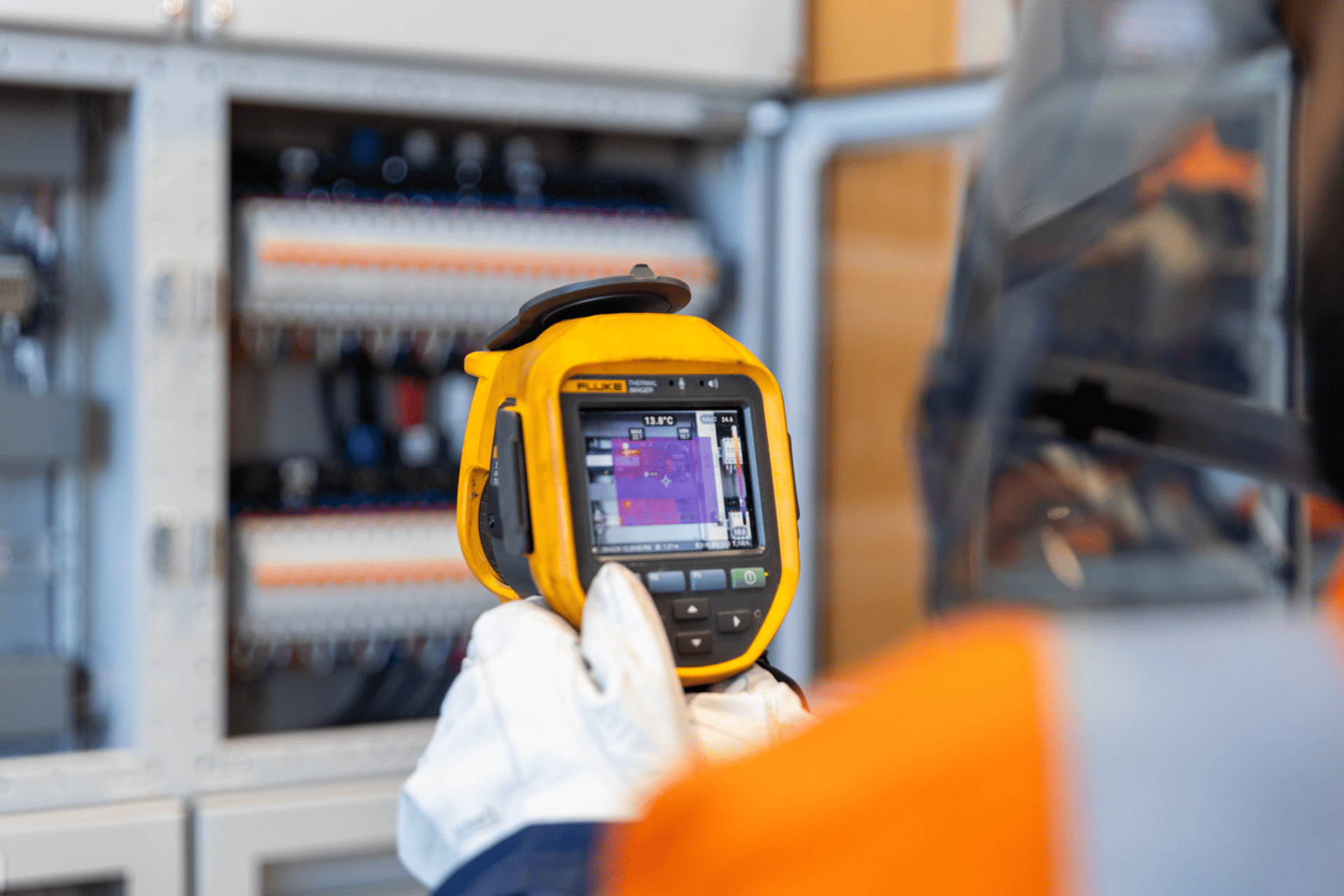

Infrared (IR) inspection, also known as thermographic inspection, is a non-invasive diagnostic tool used to detect abnormal heat patterns in electrical systems. It plays a crucial role in ensuring electrical safety in commercial, industrial, and utility organizations by identifying potential faults before they cause failures, accidents, or costly downtime. Below is a critical discussion of its impact.
1. Early Fault Detection and Fire Prevention
Infrared inspection helps identify overheating components such as loose connections, overloaded circuits, and deteriorating insulation before they lead to electrical fires. In commercial buildings like shopping malls and office complexes, where electrical fires can cause significant property damage and loss of life, routine IR inspections are vital. Similarly, in industries and utilities, undetected faults can lead to catastrophic failures affecting production and power supply.
Example:
- In a data center, an overheating circuit breaker can be detected early using IR inspection, preventing costly server failures.
- In a cement plant, overheated motor terminals can be identified before they cause unexpected production halts.
2. Preventing Equipment Failure and Downtime
Electrical failures due to undetected overheating can lead to unplanned downtime, impacting business operations. In industrial plants and utilities, unexpected shutdowns result in significant financial losses and operational disruptions. IR inspection ensures that faults are addressed before they escalate, thereby maintaining operational continuity.
Example:
- In utility substations, transformers and switchgear can be inspected thermographically to detect overheating and prevent power outages.
- In hospitals and banks, IR inspections help maintain reliable power for life-support systems and financial transactions.
3. Enhancing Workplace Safety and Compliance
Regulatory bodies such as OSHA (Occupational Safety and Health Administration), NFPA 70B (National Fire Protection Association), and ISO 18436-7 recommend or mandate thermographic inspections as part of preventive maintenance. Compliance with these standards ensures workplace safety and avoids legal liabilities.
Example:
- In industrial plants, failing electrical components can cause arc flashes, endangering workers. IR inspection reduces this risk by identifying weak points in electrical connections.
4. Energy Efficiency and Cost Reduction
Electrical resistance caused by poor connections, imbalanced loads, or deteriorated components results in energy losses in the form of heat. Infrared inspections help detect these inefficiencies, allowing corrective measures to be taken. This is particularly beneficial in high-energy-consuming facilities such as data centers, cement plants, and manufacturing industries.
Example:
- A commercial office building with an inefficient electrical system can reduce energy costs by identifying hotspots in distribution panels and taking corrective actions.
5. Improved Maintenance Strategies (Predictive and Preventive Maintenance)
Infrared inspections support predictive maintenance by identifying issues before they cause failure, allowing organizations to schedule repairs without disrupting operations. This is more effective than reactive maintenance, which only addresses failures after they occur.
Example:
- In utility organizations, IR inspections help schedule transformer and cable repairs in advance, preventing unexpected failures.
Conclusion
Infrared inspection is an essential tool for ensuring electrical safety in commercial, industrial, and utility organizations. By detecting early warning signs of electrical failure, it prevents fires, reduces downtime, enhances safety compliance, improves energy efficiency, and supports effective maintenance strategies. Implementing routine IR inspections leads to safer workplaces, cost savings, and more reliable electrical infrastructure.