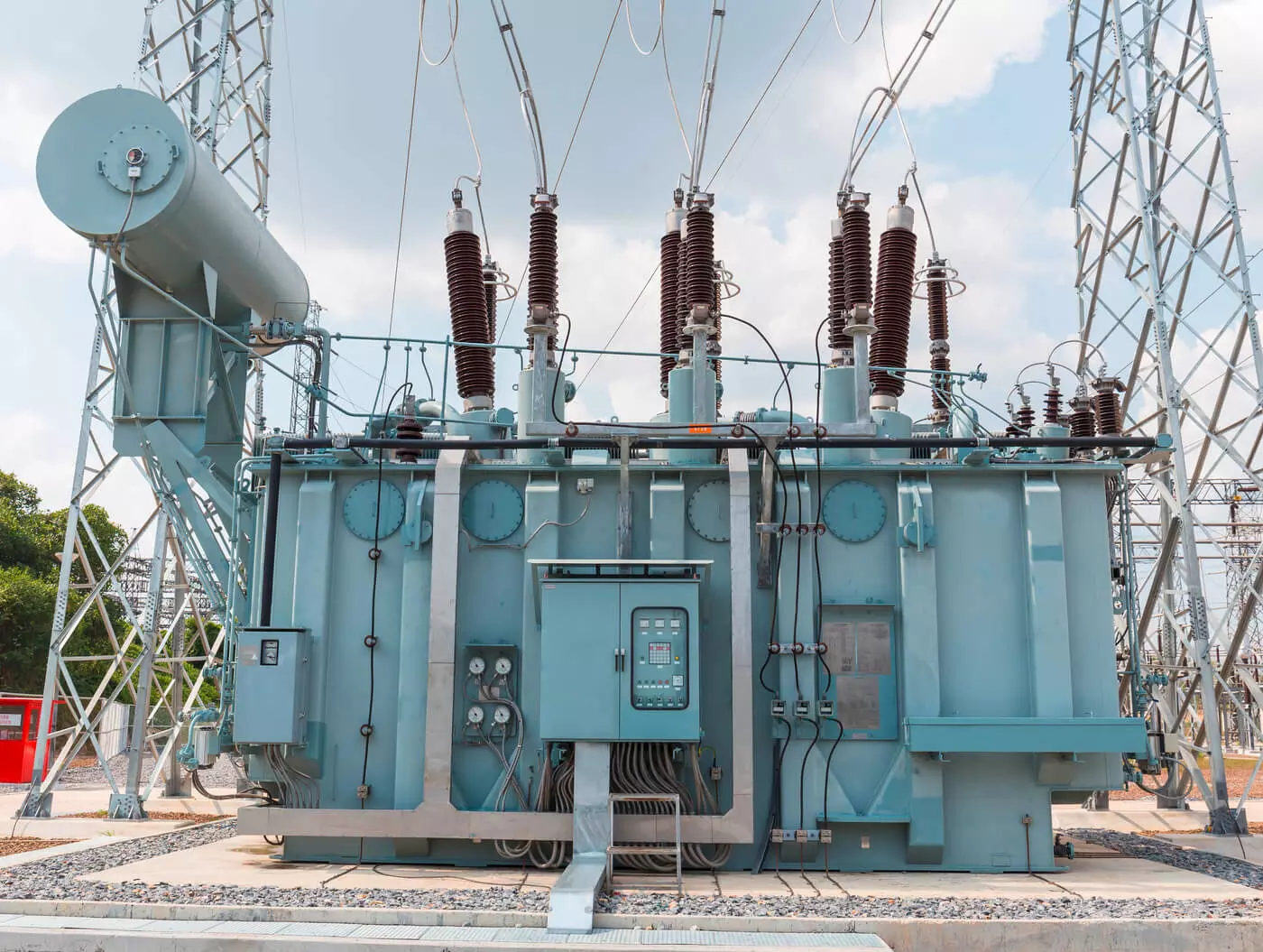

Testing an oil-filled power transformer is crucial for ensuring its safe operation, reliability, and efficiency. Below is a comprehensive list of tests that should be performed, grouped by their purpose:
1. Routine Electrical Tests
These are essential for verifying the operational integrity of the transformer.
- Insulation Resistance Test (Megger Test)
- Purpose: Checks the condition of transformer insulation.
- Method: Uses an insulation resistance tester to measure resistance between windings and ground.
- Expected Results:
- HV to LV: >1 GΩ (for high voltage systems).
- HV to Earth: >1 GΩ.
- Transformer Turns Ratio (TTR) Test
- Purpose: Ensures the correct turns ratio between primary and secondary windings.
- Method: Measures the voltage ratio to verify design specifications.
- Expected Results: Should match the nameplate ratio within ±0.5%.
- Winding Resistance Test
- Purpose: Checks for uniformity in winding resistance to detect open circuits or poor connections.
- Method: Measures resistance using a micro-ohmmeter.
- Expected Results: Resistance values should match manufacturer specifications.
- Voltage Ratio Test
- Purpose: Confirms voltage transformation ratios under normal operation.
- Expected Results: Within permissible limits of design.
- Polarity and Phase Relationship Test
- Purpose: Confirms proper polarity and phase connections of windings.
- Method: Checks alignment of phases during installation.
- Expected Results: Correct polarity and phase relationship.
2. Oil Tests
Tests on the transformer oil assess its insulating and cooling properties.
- Dielectric Strength (BDV) Test
- Purpose: Measures the breakdown voltage of transformer oil.
- Method: Uses a BDV test kit to apply voltage until breakdown occurs.
- Expected Results:
- Minimum: 30 kV (new oil).
- In-service oil: Typically >25 kV.
- Dissolved Gas Analysis (DGA)
- Purpose: Detects gases dissolved in the oil to identify internal faults like overheating, arcing, or partial discharges.
- Method: Analyzes gas concentrations using chromatography.
- Expected Results:
- Hydrogen (H₂): ≤150 ppm (normal).
- Methane (CH₄): ≤40 ppm (normal).
- Moisture Content Test
- Purpose: Determines water content in oil, which can degrade insulation.
- Method: Uses Karl Fischer titration or similar.
- Expected Results:
- New oil: <10 ppm.
- In-service oil: <35 ppm.
- Acidity (Neutralization) Test
- Purpose: Measures acidity in the oil to assess degradation.
- Expected Results: Acid number <0.3 mg KOH/g.
3. Thermal Tests
These tests assess the thermal performance of the transformer.
- Temperature Rise Test
- Purpose: Ensures the cooling system operates effectively under load.
- Method: Measures temperature rise of oil and windings during operation.
- Expected Results: Should not exceed design limits (e.g., 60°C–80°C for oil).
4. Mechanical Tests
Verify the structural integrity of the transformer.
- Leakage Test
- Purpose: Ensures that oil containment systems are intact.
- Expected Results: No visible oil leaks.
- Tank Pressure Test
- Purpose: Verifies the pressure-handling capacity of the transformer tank.
- Method: Applies pressure and checks for deformations or leaks.
- Expected Results: No deformation or leakage under test pressure.
5. Diagnostic Electrical Tests
Advanced tests to identify potential issues.
- Sweep Frequency Response Analysis (SFRA)
- Purpose: Detects winding displacements or core damage.
- Method: Compares frequency response signatures with baseline data.
- Expected Results: Consistent with baseline signatures.
- Partial Discharge Test
- Purpose: Detects localized insulation breakdown before full failure.
- Method: Measures partial discharge activity using specialized equipment.
- Expected Results: Minimal or no partial discharge activity.
- Tan Delta (Dissipation Factor) Test
- Purpose: Assesses insulation health by measuring dielectric losses.
- Expected Results:
- New insulation: <0.5%.
- In-service: ≤1%.
6. Load Tests
- Short Circuit Test
- Purpose: Measures impedance and losses under simulated short circuit conditions.
- Expected Results: Losses and impedance should align with design values.
- Open Circuit Test
- Purpose: Measures core losses and no-load current.
- Expected Results: No-load losses should match nameplate data.
7. Protection and Auxiliary Tests
- Buchholz Relay Test
- Purpose: Tests the functionality of the relay to detect gas accumulation or pressure surges.
- Expected Results: Relay should trip under simulated conditions.
- Cooling System Performance Test
- Purpose: Assesses fans and pumps for proper operation.
- Expected Results: Adequate cooling to maintain oil and winding temperatures.
8. Visual and Physical Inspection
- Significance: Identifies physical damage, loose connections, and cleanliness.
- Expected Results: No physical damage, secure connections, and clean surfaces.
By conducting these tests at commissioning, during periodic maintenance, or after faults, power transformers can operate safely, reliably, and efficiently.